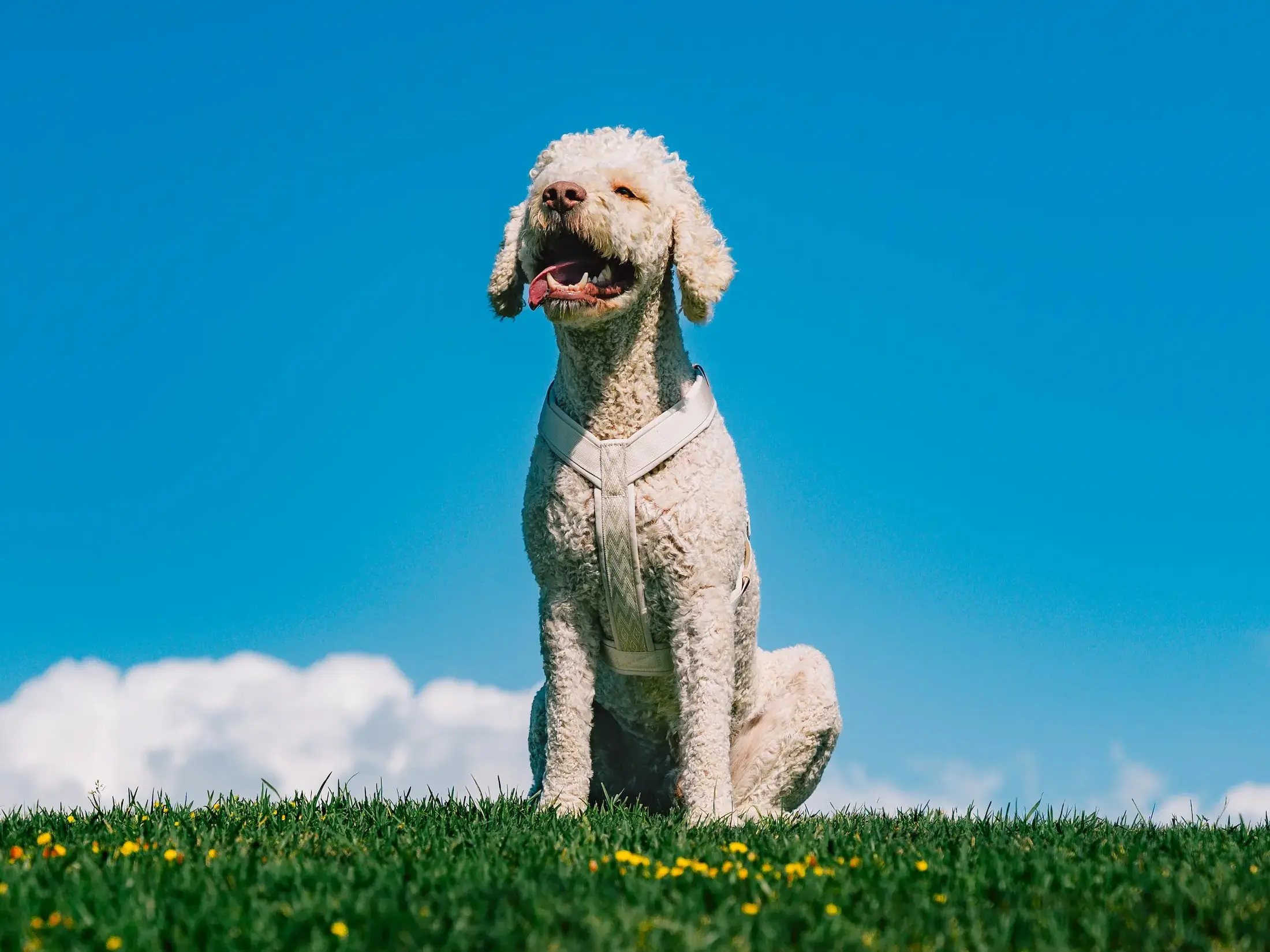
Going for a walk is much more than just leaving the house. For your dog, it’s a chance to discover new smells, explore new places, and spend time with you. Choosing the right accessories can help make that experience more comfortable for both of you.
A dog harness allows you to attach the leash to a strap that goes around the dog’s body. However, for it to work properly, it’s important to consider its design, materials, and, above all, how well it fits the dog.
At Moppi & Co, we believe that comfort and design should go hand in hand. That’s why, before you choose your favorite model, we’ll tell you what to look for and how to make the right choice.
What is a dog harness used for?
The main function of a dog harness is to secure the dog using a structure that wraps around part of its torso. When tension is applied to the leash, the harness distributes that force across the contact points of the harness, rather than concentrating it solely around the neck.
The specific distribution depends on the design and fit. Not all models rest on the same points or behave the same way when the dog changes direction.
It can be handy for everyday walks, city tours, or outings to new places, where you need to keep up with your child’s movements and keep them close when the situation calls for it.
To assess the purpose of a dog harness, it’s also important to understand its limitations: it’s a restraint device. A peaceful walk also depends on the environment, the leash, and the dog’s training.
What Are the Benefits of Using a Dog Harness on a Walk?
A well-chosen harness provides an attachment point on the dog’s body that can make everyday handling easier. In addition, adjustable models allow you to adapt the fit to different body types.
This is especially useful because two dogs of the same weight can have very different chest, neck, and torso lengths.
Some of the things worth looking for include:
- Stable fit: The harness stays in place while walking.
- Comfortable fit: straps, edges, and seams should not cause discomfort.
- Proper adjustment: You should be able to adjust the model within its size range.
- Practical use: It should be easy to put on and check that it’s fastened properly.
These benefits depend on whether the model fits your dog. A soft fabric or an attractive design can’t make up for the wrong size.
How to Choose the Best Harness for Your Dog?
The best dog harness is the one that fits your dog’s size, body type, and your daily routine. Before deciding on a color, consider these points.
Measure your chest and check the size chart
Use a flexible measuring tape and take the measurements with your dog standing in a natural posture. Follow the instructions on the product page to locate the exact measurement points.
You’ll usually need your chest measurement and, depending on the style, your neck measurement. Write down the results and compare them to the corresponding chart.
Don’t base your decision solely on the brand, weight, or size of a previous accessory. A size M may have different measurements from one collection to another.
If a measurement is close to the limit, check the product recommendations before purchasing. At Moppi, we can help you understand the guidelines so you can make your choice with greater confidence.
Check the setpoints
Its adjustment system allows the harness to be adapted to the dog’s body shape, but only within certain limits. It does not turn a size that is too large into a proper fit.
Once it is in place, check that the straps are flat and free of twists, and that the harness body remains centered.
For puppies, repeat this check frequently. Growth can cause the fit to change even if the collar still fastens properly. Buying a model that’s too loose so it will last longer compromises its function from the very first walk.
Take a look at the materials and finishes
Pay attention to both the outside and the part that touches your body. The thickness, flexibility, weight, and placement of the seams all affect how the garment feels when you wear it.
The Sorrento Blue harness, for example, combines green and blue stripes with lightweight neoprene and a breathable mesh lining. It’s an option worth considering if you’re looking for that combination of fabric and finish.
If you prefer a different texture, the Firenze Burgundy harness features burgundy teddy fabric and a breathable inner lining.
When choosing materials, consider how they feel on your dog and the typical conditions during your walks.
Check the fit of the harness
In addition to the measurements, it’s important to consider how the pieces are distributed across the body. Notice where the front panel, side straps, and fasteners are located.
The Portofino Ivory dog harness features a Y-shaped design, ivory-colored fabric, and a padded neoprene lining.
Style is a factor to consider, but you should check how it looks on your dog. Even within the same design category, proportions and fit can vary.
Comfort and Freedom of Movement: What to Check
The most useful test begins when your dog is moving. Before using the harness for the first time on a long walk, watch how your dog walks around the house and how it sits or changes direction.
Make sure the parts don’t shift toward the armpits and that no straps are so close to the front legs that they rub against them constantly.
It’s also a good idea to check the alignment from both sides. Sometimes, uneven adjustment causes the assembly to tilt, even if it looks correct when viewed from above.
After the first walk, check the contact areas. If you notice any persistent marks, chafing, or a noticeable change in the dog’s gait, stop using that fit and figure out what’s going on.
Don’t assume that they just need to get used to the discomfort. You may need to readjust the straps or choose a different size or model.
How can you get your dog used to wearing a harness?
Your first experience will influence how you feel about the accessory later on. Find a quiet moment when you’re not in a rush to head out right away.
The dog welfare organization Dogs Trust recommends a gradual introduction, associating the harness with pleasant experiences. You can check out their guide on how to get a dog used to a harness.
Start by letting him explore it on his own. Then, bring him closer little by little and reward him for staying calm. Before fastening it, also check how he reacts to the sound of the fasteners.
If the model is putting the garment on over their head, avoid pushing it through the opening. Let them go at their own pace, and take a step back if they pull away or seem concerned.
Once he’s comfortable wearing it, encourage him to move around for a few moments at home. It’s better to spread out the adjustment process over several short sessions than to try to complete it all at once.
Does the harness prevent the dog from pulling?
A conventional dog harness alone does not teach a dog to walk on a loose leash. It can change the way tension is transmitted, but it does not automatically solve the underlying cause of pulling.
Your dog may pull because he wants to follow a scent, get closer to another animal, or move faster than you’re walking. Paying attention to when this happens helps you understand what you need to work on.
Practice in places where he can pay attention, and reward him when he walks without pulling on the leash. The difficulty of the route should be adjusted to what he can handle.
Avoid choosing a training aid in the hope that it will replace that learning. If walks continue to be difficult, a dog trainer who uses positive reinforcement can guide you.
A harness or a collar for daily walks?
The choice depends on the dog and how you plan to use each accessory. The collar allows you to attach an ID tag and provides support around the neck. The harness connects the leash to a structure across the chest.
They can also be used together, as long as both are properly secured and do not interfere with each other.
Rather than looking for a one-size-fits-all answer, see how your walk goes. What matters is how often your dog pulls, how comfortable the harness is to put on, and how stable it stays when your dog moves.
In any case, avoid using the leash to give corrective tugs. The equipment should support a walking style that allows for calm communication.
Common Mistakes When Buying and Using a Harness
Some problems start before you even step outside. Keeping them in mind can save you from having to make unnecessary adjustments:
- Don’t choose based on appearance alone: first check the measurements, then look for a design you like.
- Leaving too much slack: A harness that twists or shifts needs to be checked.
- Tighten to secure: Check the overall fit, rather than continuing to shorten the straps.
- Don’t forget to have it checked: Growth, weight changes, and wear and tear can affect how it fits.
- Don’t ignore wear and tear: Check the seams, rings, buckles, and adjusters before continuing to use it.
Proper care is also part of maintenance. Refer to the instructions for your specific model, and let it dry completely after cleaning before storing it.
Design and comfort you'll enjoy on every ride
There are accessories that end up becoming part of your story: the harness from your first vacation together, the one that’s with you every morning, or that print that seems tailor-made for your dog. Choosing them is also a personal choice, because their style can reflect your dog’s personality and everything you share.
That idea inspires our collections of dog harnesses. At Moppi & Co, we place special emphasis on our own designs, which are inspired by the Mediterranean and crafted from high-quality materials, fabrics that are soft to the touch, and details designed for everyday use. We pay attention to both how they look and how your dog feels when wearing them.
Soft interiors, adjustable straps, and meticulous finishes come together in a design where every texture and color has its place. The Capri Orange harness, for example, combines orange and light blue stripes with a breathable mesh interior, adding a cheerful touch to everyday walks.
The ability to pair the harness with a strap and a bag holder from the same collection lets you create a look with personality by choosing the pieces that fit your routine.
Because your dog has his own way of discovering the world and deserves accessories designed with the same care you put into choosing your own. A good fit, a pleasant texture, and a design that makes you smile when you pick up the leash are also part of enjoying time together.
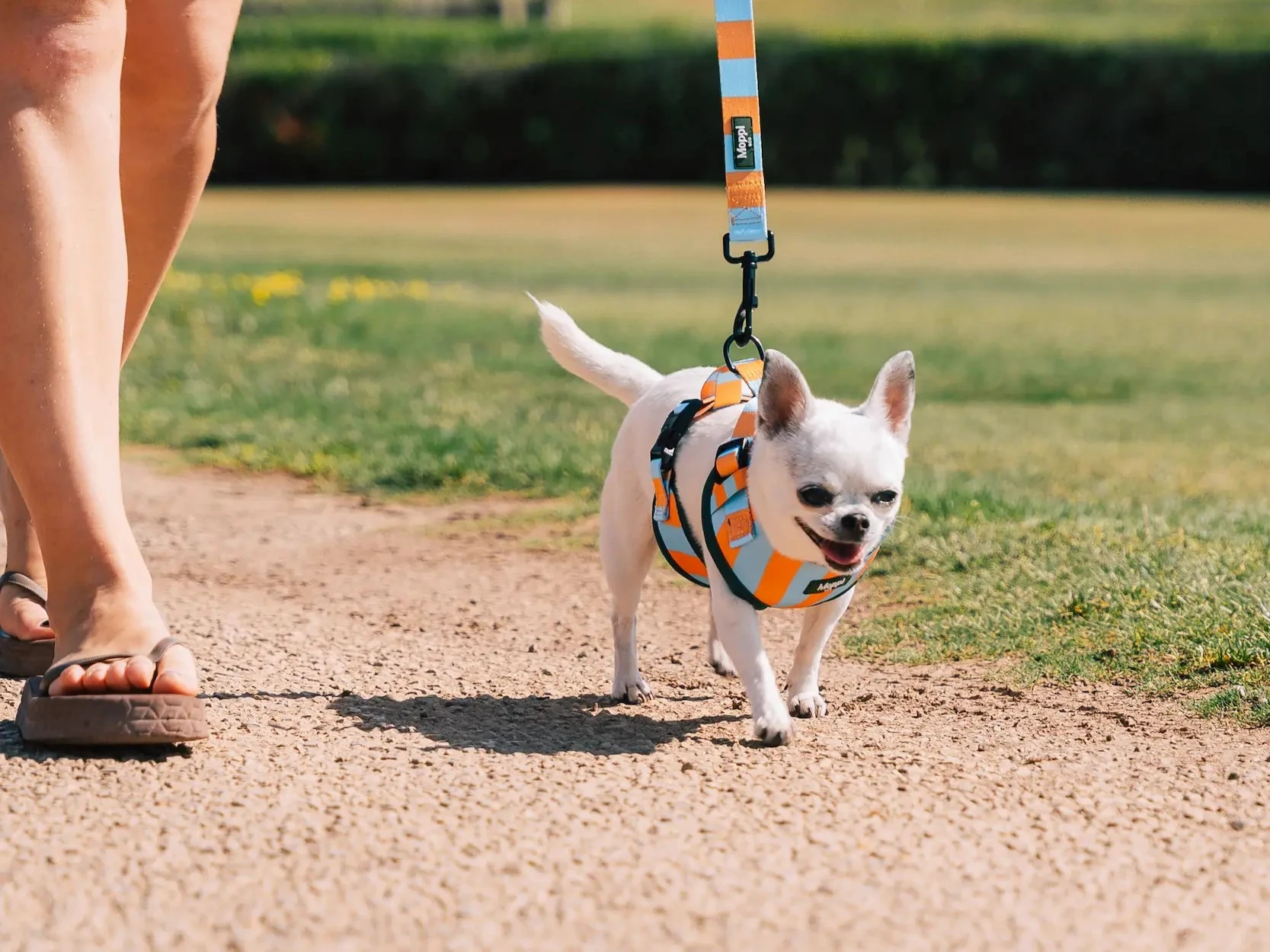
Designed for dogs that deserve more
At Moppi & Co, we believe that the best dog harnesses should combine comfort, quality, and unique designs. Each harness is born from an original idea designed to add personality and style to daily walks. We carefully select high-quality materials and pay close attention to every fabric, finish, and detail to create comfortable, reliable, and special accessories.
We believe that style shouldn’t be reserved solely for humans. Your dog is part of your family, has its own personality, and deserves accessories that reflect it. With matching harnesses, collars, leashes, and bag holders, you can create a complete outfit with as much style and character as your own.
When you choose Moppi & Co, you’re choosing designs thought out down to the last detail, carefully selected materials, and accessories created for dogs who deserve more.
Frequently Asked Questions About the Best Dog Harnesses
How do I know if the harness fits him properly?
Your dog should stay centered while walking, without turning, hunching over, or rubbing against its armpits. Check the fit by following the model’s instructions and observe how your dog moves while wearing it.
Can I use a harness on a puppy?
Yes, as long as the size and design fit your current measurements. Insert the accessory gradually and check the fit as your child grows. The range of adjustment is limited.
Why choose a harness from Moppi & Co?
Moppi & Co harnesses combine comfort, quality, and a unique design. Each model is adjustable and designed to promote natural movement. You can also pair it with a collar, a leash, and a bag holder from the same collection.
What should I do if my dog is between two sizes?
Check the specific guide and verify all the required measurements. Don’t base your decision solely on weight. If you have any questions about a Moppi model, contact us before making your choice.